The Sopot Science Association (SSA) welcomes contributions to the 2026 edition of the International Sopot Youth Conference entitled Where the World is Heading. The conference is the continuation of the Sopot Youth Forum. Since 2008 over 1000 scientists from many countries have presented their work during the event.
We invite young scientists or science enthusiasts, university students, Ph.D. students and young doctors (up to two years after defense) to present their work, visions, opinions, and thoughts.
The Sopot Youth Conference consists of two thematic blocks: humanities and social sciences and the second one – natural and physical sciences. Both oral (15 minutes) and poster presentations are welcome.
The 2026 edition of the conference will be held in a hybrid mode. We welcome everyone to take part in the special, interdisciplinary session dedicated to inclusiveness in science. More information soon!
Due to the multidisciplinary character of the Sopot Youth Conference abstracts and presentations should be prepared in such a way as to be digestible for attendees outwith your discipline. The Conference language is English.
Our Conference Proceedings are registered, and have an ISBN, and thus can be cited.
Just like in previous editions this year the best presentations will be granted AWARDS.
This year’s edition is organized in partnership with the YOLA initiative.

For this year’s Keynote lecture we are incredibly excited to present you an Invited session on Youth Ocean Leadership & Advocacy! Meet our speakers & read their talk abstracts below:
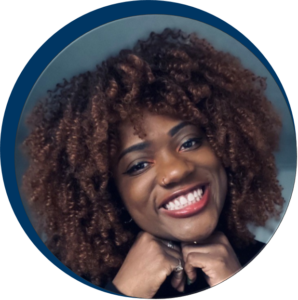
Timberlyn Duncan is a coastal research assistant at the coastal studies institute in the Outer Banks of the United States. There, she and her team are integrating a climate justice framework to understand the introduction of carbon dioxide removal, a new climate mitigation technology. She is working towards a master’s degree in marine science at North Carolina University. Her research focuses on climate mitigation responses from coastal communities across the Outer Banks. Her previous research examined anthropogenic influences on the coastline and impacts there on marine ecosystems. She has also spent the past five years teaching, both formally and informally, serving as an educator in local aquariums on educational outreach teams and in the local school district.
In addition, she initiated her own educational outreach and research literacy project for minority youth. The Manny Project was created to amplify the voices of minority children interested in the ocean and its conservation. Her efforts engage youth and address disparities in access, education, and opportunity for those historically excluded from marine spaces. She also engages in participatory science with her community. This encourages citizen science work and data representation.
Timberlyn will deliver a talk titled People, Place, and Oceans: An integrated approach to communicating and conducting research. You can check out the abstract below:
Climate change is increasingly reshaping coastal and marine environments, yet public support for mitigation and adaptation efforts remains uneven across vulnerable coastal communities. Addressing these challenges requires not only scientific research, but also an integrated approach to communicating marine and coastal science in ways that are socially, culturally, and community centered. Effective research and communication strategies must bridge environmental science with lived experiences, local knowledge, and community narratives to better understand how people perceive and respond to climate hazards.
My research examines the extent to which place attachment and connection to land, combined with climate hazard awareness and risk perception, influence coastal residents’ willingness to support climate mitigation initiatives. This presentation highlights the importance of integrating social science constructs into marine and coastal research communication to foster more equitable and effective mitigation strategies. Through case studies and community stories, I will also examine how histories of marginalization, cultural discrimination, and inequitable policy responses in minority coastal communities have contributed to inadequate mitigation efforts and disproportionate vulnerability to coastal hazards. By centering community voices and interdisciplinary communication, this work emphasizes the need for inclusive approaches that strengthen both scientific understanding and community resilience in the face of accelerating climate change.
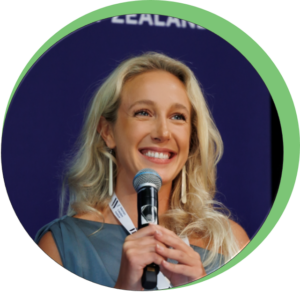
Veronica Rotman is a marine scientist, tertiary lecturer, science communicator, and doctoral candidate. Growing up freediving and spearfishing in the frosty waters of Te Waipounamu, the ocean has fed her, grounded her, and challenged her since childhood. This lived connection – and years of observation – is what drives her to protect it. Outside her research, Veronica has established and delivered remote tertiary training in sustainable aquaculture and marine science, presented for National Geographic, is a TEDx speaker, has spoken at the United Nations Ocean Conference, and recently co-founded NZ Ocean News, a social media platform translating complex ocean policy and research into accessible, evidence-based information for the public.
Veronica will deliver a talk titled From Research to Reels: Communicating Science for Real-World Impact. Find the abstract below:
Scientific research has never been more important – yet public trust, misinformation, and digital noise make communicating science increasingly challenging. In this talk, marine scientist and science communicator Veronica Rotman explores how students and early-career researchers can move beyond traditional academic communication to make their work accessible, engaging, and impactful in the real world. Using NZ Ocean News as a case study, the session will examine how to translate complex ocean science and environmental policy into short-form digital content that reaches broad audiences without sacrificing accuracy or nuance. The talk will cover practical strategies for storytelling, framing, audience engagement, and building trust online, while reflecting on the growing role scientists play in shaping public understanding and decision-making.
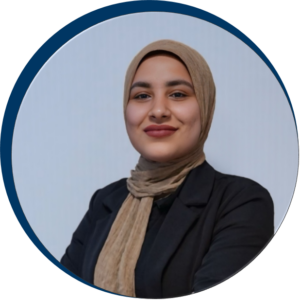
Hadeer Elkhouly is an aquaculture and marine science professional, science communicator, and sustainability advocate currently pursuing a Master’s in Open Innovation & Youth Entrepreneurship in the Mediterranean Agrifood Sector in Italy. Originally from Egypt, her work focuses on sustainable aquaculture, the blue economy, and youth engagement in ocean and agrifood systems.She works at the intersection of science, communication, and sustainability, translating complex marine and environmental issues into accessible narratives and real-world impact. Her interests include climate resilience, sustainable food systems, and empowering youth participation in shaping the future of oceans and coastal communities.
Hadeer will deliver a talk titled Blue Economy, Science Communication, and Youth Leadership in Action: Insights from Egypt, Africa, and Beyond. Read the abstract below:
The blue economy is rapidly evolving across Egypt, Africa, and the wider global context, requiring not only scientific innovation but also effective communication and inclusive leadership to translate knowledge into real-world impact. This talk explores how science communication can bridge the gap between marine research, policy, and society, making complex ocean and food systems issues more accessible and actionable. It also highlights the growing role of youth leadership in shaping sustainable blue economy development across Africa and beyond through digital engagement, storytelling, and interdisciplinary collaboration. Drawing on practical examples from ocean communication and emerging science platforms, the session showcases how young scientists and communicators can turn research into action and contribute to more sustainable and inclusive ocean futures.
Abstract submissions (max. 1800 characters) |
|
Acceptance notifications |
29 April 2026 |
Conference |
10 June 2026 |
Joanna Całkiewicz, SSA/NMFRI, Poland
Dhanushka Devendra, IO PAN, Poland
Luca Ferrero, University of Milano-Bicocca, Italy
Maria Carmen García Martínez, IEO-CSIC, Spain
Stephan Juricke, GEOMAR Helmholtz-Zentrum für Ozeanforschung Kiel/Kiel University, Germany
Yolanda Koulouri, IMBBC-HCMR, Greece
Karolina Pierzynowska, University of Gdansk, Poland
Szymon Smoliński, SSA/NMFRI, Poland
Joachim Dengg, GEOMAR Helmholtz-Zentrum für Ozeanforschung Kiel, Germany
Marcin Stokowski, SSA/IO PAN, Poland
Natalia Szymańska, SSA/IO PAN/Cushman, Poland
Grzegorz Węgrzyn, University of Gdansk, Poland
Marta Wojewódka-Przybył, INGPAN/GeoPlanet, Poland
Tymon Zieliński, SSA/IO PAN, Poland
Nina Dietz, Be a Blue Citizen/Youth4Ocean Forum
Iwona Gin, Nausicaa/YOLA, France
Izabela Kotyńska-Zielińska, SSA/Today We Have, Poland
Katarzyna Kukowicz-Zarska, Ateneum-University in Gdansk, Poland
Dorota Majewicz, SSA/Koszalin University of Technology/Silkroad Universities Network, Poland
Grażyna Niedoszytko, Gdynia Aquarium, Poland
Maïna Proustn Youth4Ocean Forum/ECOP France
Natalia Treder-Rochna, University of Gdansk, Poland
Mariola Zalewska, University of Warsaw, Poland
Bartosz Bagiński, Warsaw University of Technology, Poland
Wirginia Hepert, SSA/University of Hamburg, Germany
Maja Karasch, University of Warsaw/Austrian Cultural Forum in Warsaw, Poland/Austria
Aleksandra Koroza, SSA/IO PAN/OYSTER, Poland
Niccolò Losi, University of Milano-Bicocca, Italy
Andrea Doldi, University of Milano-Bicocca, Italy
Jan Jakub Śliwiński, SSA/IOPAN, Poland
Renee Zbizika, Stanford University, USA
Aleksandra Koroza, SSA/IO PAN/OYSTER
Izabela Kotyńska-Zielińska, SSA/Today We Have; Email: kotynska-zielinska@todaywehave.com
Natalia Skierzyńska, SSA/IO PAN
Jan Jakub Śliwiński, SSA/IO PAN; Email: jsliwinski@iopan.pl
Tymon Zieliński, SSA/IO PAN
Contact for natural sciences is Jan Jakub Śliwiński
and for humanities and social sciences –